
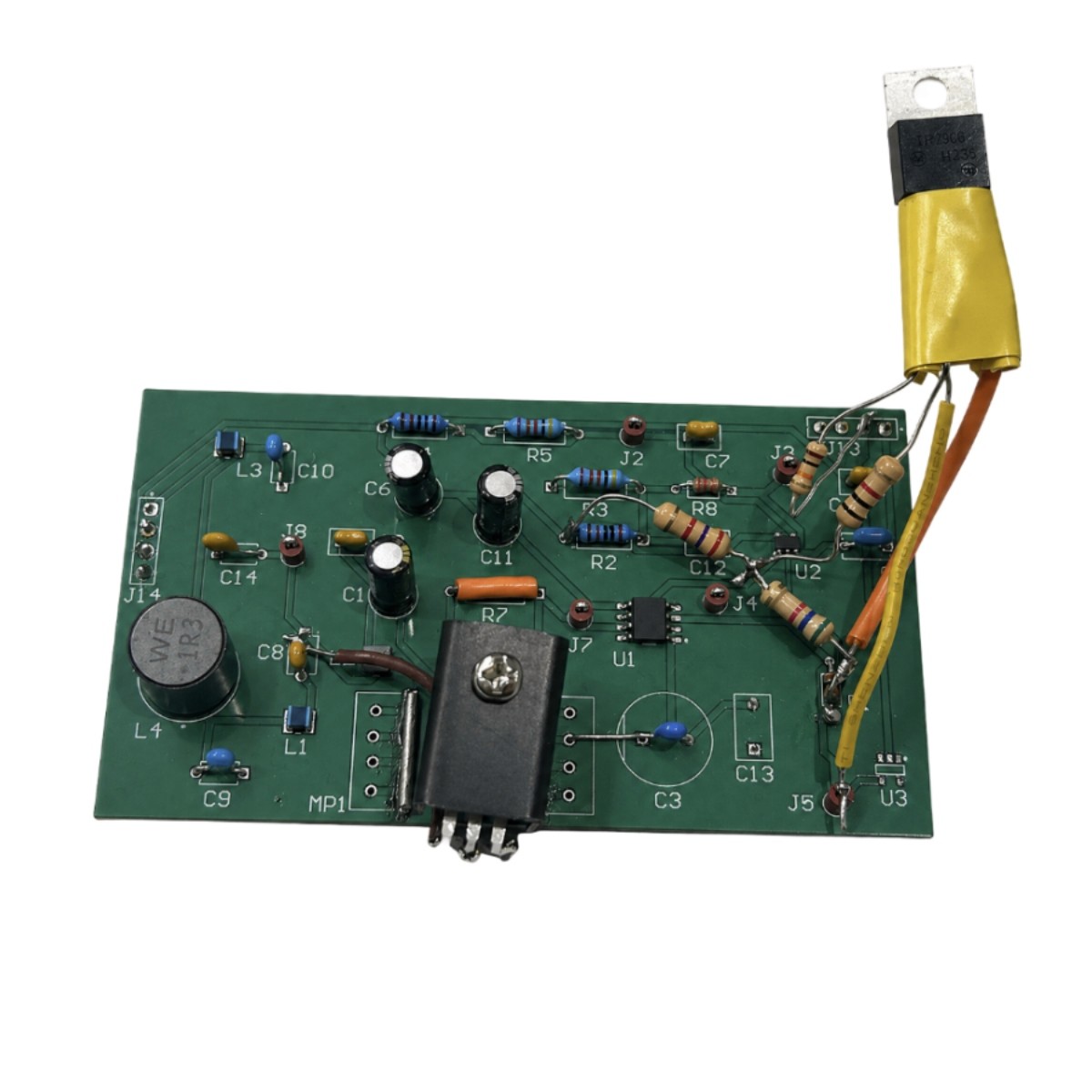
> The Goal
This was a semester-long course project where our team built one subsystem of a larger software-defined radio. A software-defined radio is a radio system where many signal-processing tasks are handled in software, but it still needs real hardware to transmit and receive signals.
My subsystem was the radio-frequency power amplifier and filter, which acted as the final output stage of the transmitter by increasing the radio’s transmit signal to a usable power level and filtering out unwanted frequency components before the signal was sent to the antenna.
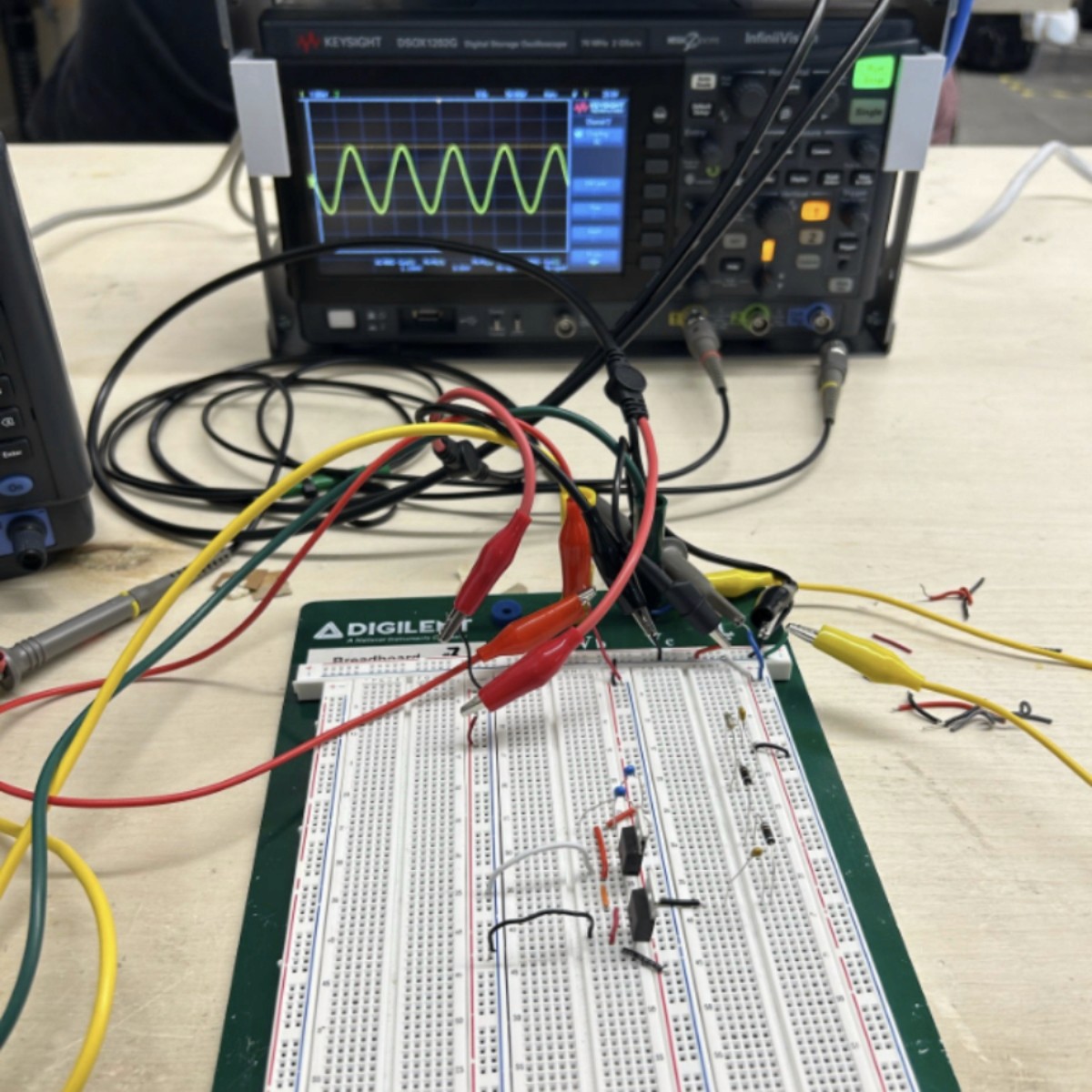
Early breadboard testing of design
> Requirements
The subsystem was designed around a set of measurable course requirements. It needed to work across the project’s high-frequency radio range of 8–16 MHz and deliver 1–10 W of output power into a standard 50 Ω load, which represented the antenna system during testing.
Signal quality was also important. When an amplifier increases a signal’s power, it can accidentally create unwanted extra frequency components called harmonics. These harmonics can interfere with the intended radio signal, so the design needed a filter to reduce them. The final output had to keep total harmonic distortion below 10%, meaning the unwanted harmonic content had to stay small compared to the desired signal.
The subsystem also needed transmit-enable control, allowing the amplifier to turn on during transmission and turn off when the radio was not transmitting.
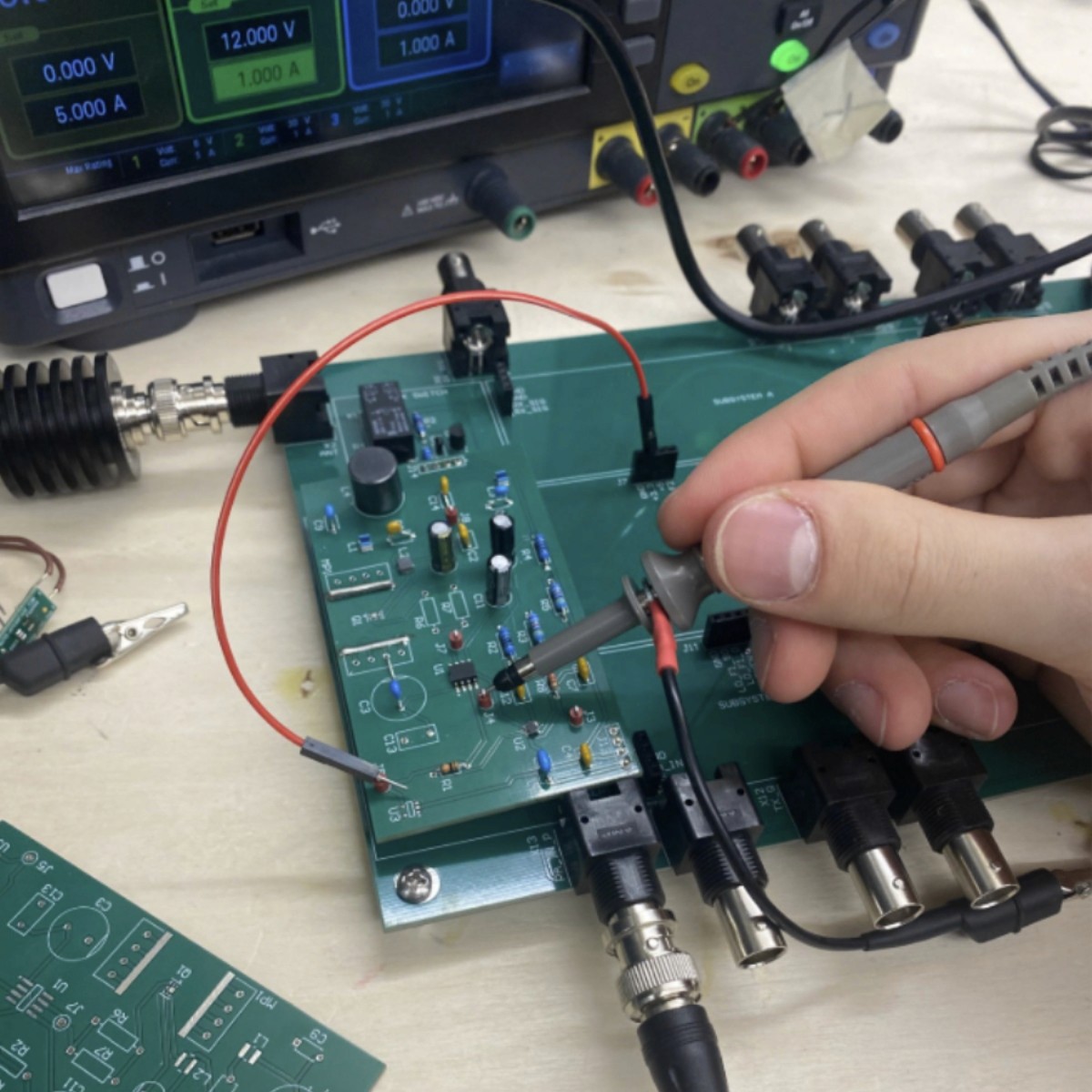
PCB being tested against the requirements
> Design and PCB Implementation
I started by using LTspice to simulate and iterate on the schematic before moving into the physical printed circuit board design. The final PCB shown here was the hardware implementation we landed on after refining the signal chain, component choices, and filter values.
The transmit signal first enters the comparator, which converts the incoming waveform into a clean switching signal. This switching signal is then sent to the gate driver, which provides the fast, high-current drive needed to switch the power transistor efficiently. The gate driver’s enable pin was connected to the inverted active-low transmit-enable signal, allowing the amplifier stage to turn on only when the radio was transmitting.
From there, the signal passes into the Class-D amplifier stage. This stage acts as the main power stage of the subsystem, using high-speed switching to increase the signal’s output power. Since a switching amplifier produces unwanted harmonic content, the amplified output is then passed through a 5-pole LC filter. The filter uses inductors and capacitors to preserve the desired transmit frequency while reducing higher-frequency harmonics before the signal leaves the board.
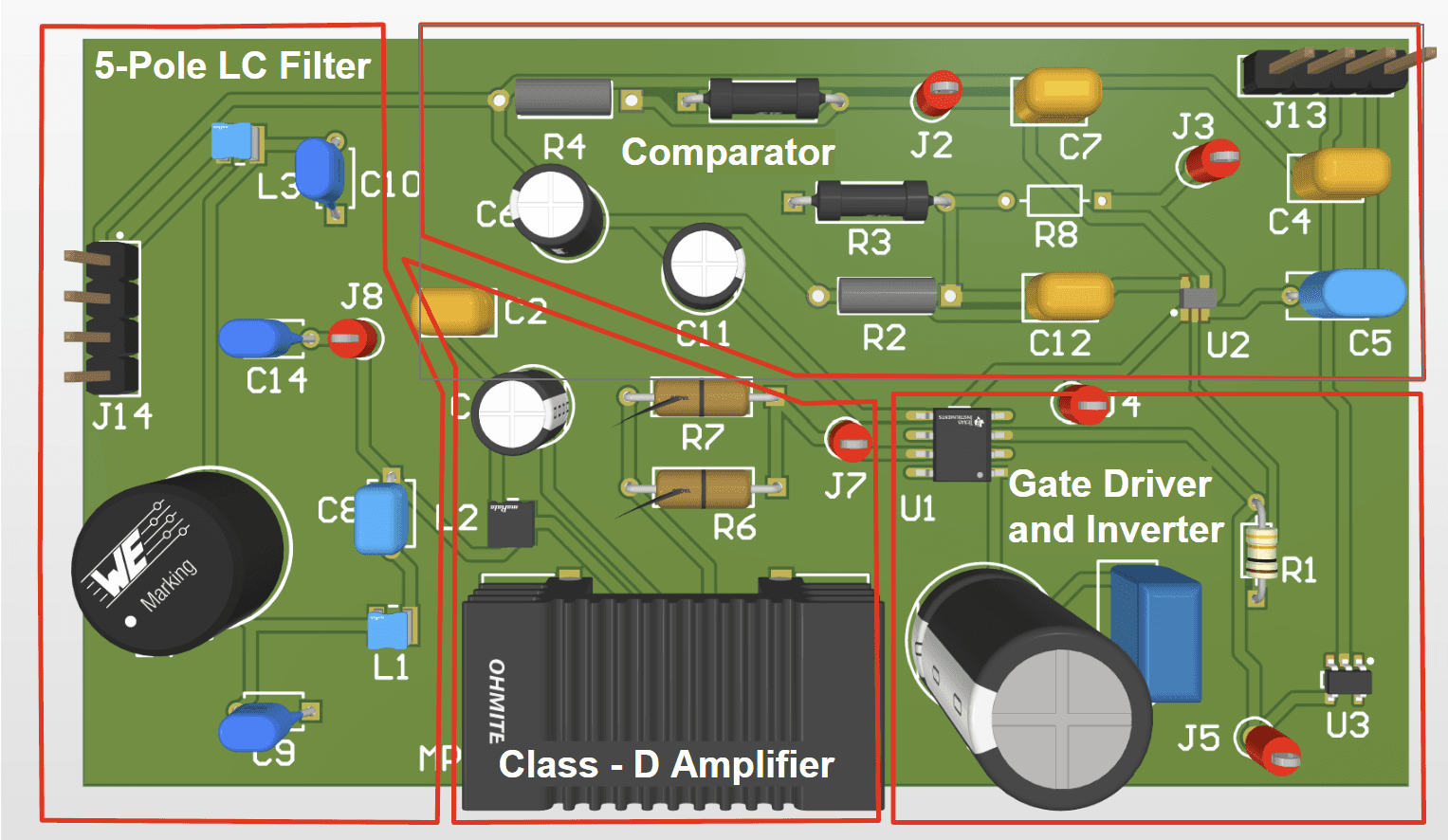
Annotated Screenshot of Altium PCB
> Results
We tested the final PCB against all subsystem requirements and passed each one, including output power, total harmonic distortion, and transmit-enable control.
Our PCB was also selected for integration with the other subsystems to build the full software-defined radio. The integration was successful, with our amplifier and filter operating as the radio’s final transmit-output stage.
© Eshaan Marocha 2025